Webinar | AMA: Ask Me Anything Session 3 – I-9 and Compliance in 2026
I-9 compliance has entered a new phase of enforcement, and for many employers, processes that once felt manageable now carry significantly higher stakes. During this live Ask Me Anything session, attendees brought real-world questions directly to HRlogics experts on audit readiness, remote verification, document retention, error correction, E-Verify requirements, and how evolving enforcement trends are changing employer obligations.
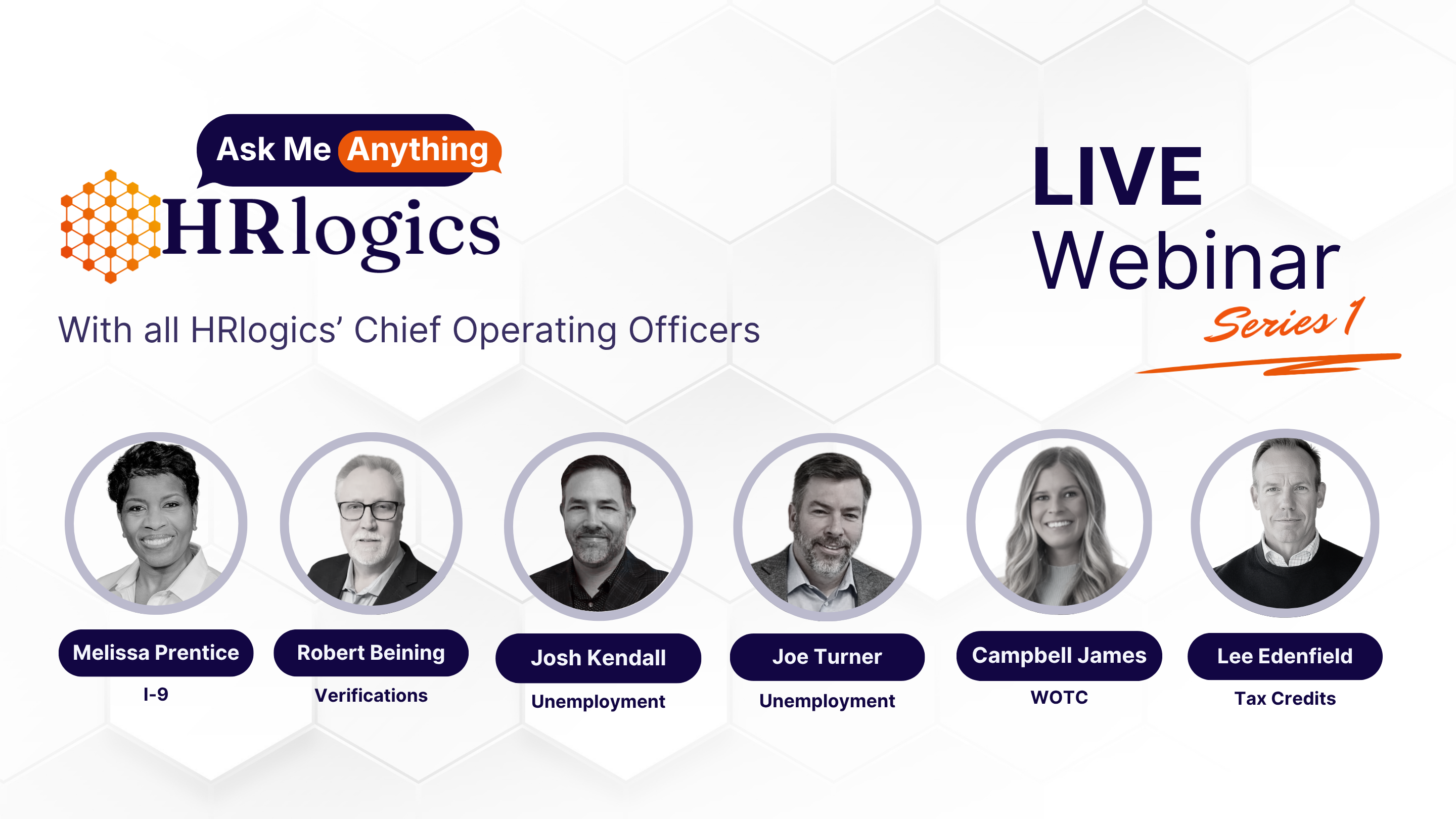
Throughout the discussion, Melissa Prentice, President of Clear I-9 by HRlogics, and host Biz Williams, CRO at HRlogics, addressed practical compliance scenarios organizations are actively facing in 2026. The conversation explored how employers should approach revised Form I-9 requirements, when remote verification rules apply, how corrections should be documented, and where organizations unintentionally create audit exposure through inconsistent processes.
Speakers also emphasized that many employers continue to overestimate what E-Verify covers and underestimate the importance of maintaining complete I-9 procedures. The session clarified the distinction between employment eligibility verification and E-Verify participation while outlining the operational controls employers should implement to maintain compliance across hiring workflows.
The webinar also highlighted practical actions employers can take, including how to:
- Strengthen I-9 completion and retention processes across hiring teams and locations
- Understand where E-Verify requirements begin and end within the compliance process
- Correct I-9 errors properly while preserving documentation and audit defensibility
- Apply remote verification procedures correctly and avoid creating unnecessary exposure
- Build repeatable workflows that support consistency during audits and internal reviews
What attendees learned:
1. I-9 compliance and E-Verify are not interchangeable
Employers learned that completing Form I-9 correctly remains the foundation of compliance and that E-Verify does not replace required verification, retention, or documentation obligations.
2. Small process mistakes can become major compliance risks
Incomplete forms, inconsistent correction methods, missing documentation, and delayed remediation can increase exposure and become difficult to defend during an audit.
3. Remote verification and audit readiness require intentional process design
Organizations using remote workflows must follow specific procedures, maintain supporting records, and ensure teams apply the process consistently across the business.
For HR, compliance, payroll, and operations teams, I-9 management is no longer just an onboarding activity. As enforcement expectations continue to evolve, organizations need clear processes, stronger documentation practices, and greater operational visibility to reduce risk and stay prepared.
Watch the full webinar recording on demand to hear expert answers to real employer questions and learn how organizations are adapting their I-9 strategy for 2026.
.png)