The date employers were tracking just moved for the second time in ten days.
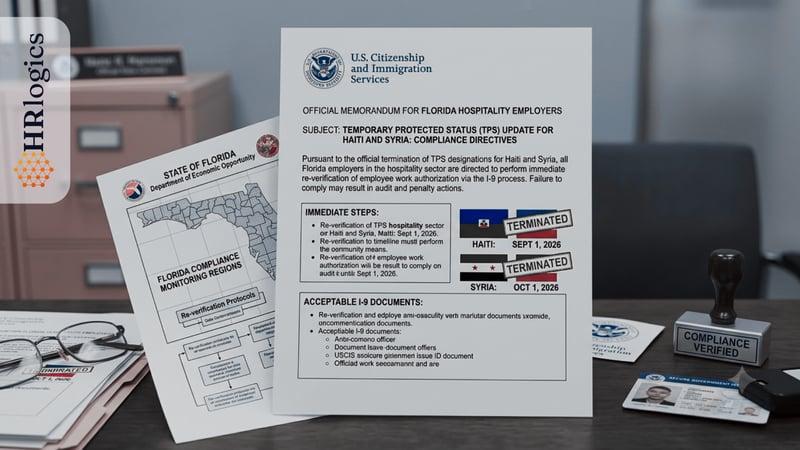
On July 1, 2026, USCIS set July 10 as the placeholder expiration date for Haitian and Syrian TPS-based work authorization. That date has now come and gone too. On July 10, USCIS issued new guidance superseding its July 1 message, extending the Haiti EAD placeholder date to July 24, 2026. The same week, USCIS instructed employers to enter “as per court order” in Form I-9 Section 1 and July 17, 2026 in Section 2 for Syrian TPS beneficiaries, with E-Verify cases updated to match.Haiti and Syria are no longer moving on the same clock. That split matters for anyone updating records this week.
What actually changed on July 10
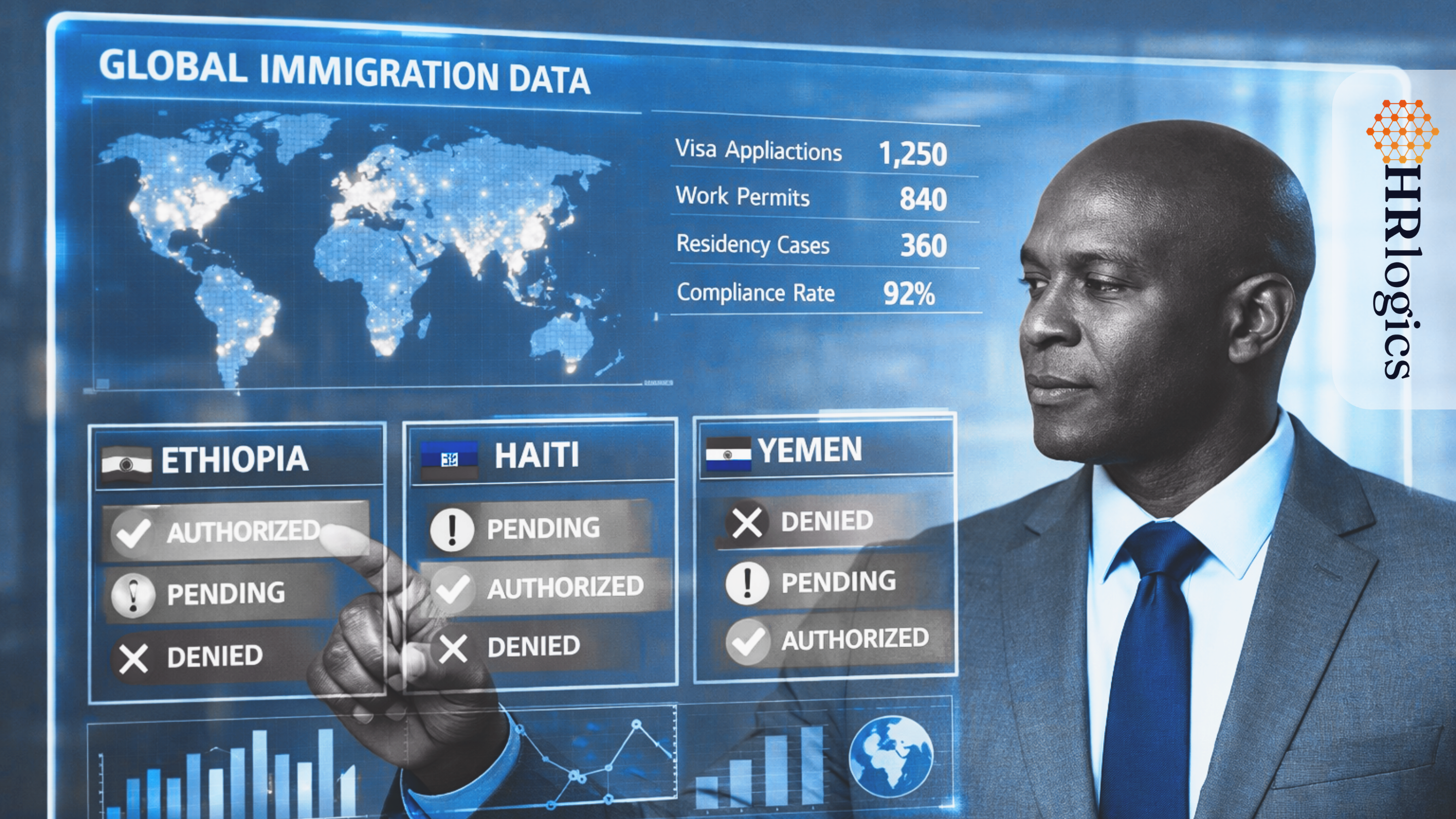
Six TPS designations besides Haiti got swept into this update. Employment authorization for TPS holders from Burma, Ethiopia, Somalia, South Sudan, Syria, and Yemen was extended through July 17, 2026, while Haiti alone was extended through July 24, 2026. Every one of the seven cases traces back to the same event: the Supreme Court's June 25 ruling in Mullin v. Doe, which cleared DHS to move forward with TPS terminations and narrowed the courts' ability to block them.
The Haiti and Syria litigation is still proceeding on separate tracks in the lower courts, Miot et al. v. Trump in the District of Columbia for Haiti and Dahlia Doe v. Noem in the Southern District of New York for Syria. That is the practical reason the dates no longer line up. Each judge is moving at a different pace toward implementing the Supreme Court's decision, and USCIS is extending work authorization in short increments to bridge the gap rather than issuing one long extension.
Analysis from Greenspoon Marder put the scale in context. The Mullin ruling is expected to affect roughly 1.3 million TPS holders across approximately 10 country designations, well beyond the two countries named in the case. Haiti and Syria are simply first in line.
Why the short leash is the real signal
USCIS keeps repeating the same phrase in every one of these releases: this extension is “limited relief until the lower courts align with the U.S. Supreme Court's favorable decision.” That phrasing is not boilerplate. It is the agency telling employers directly that these are stopgaps, not settlements, and that the placeholder will likely move again before it expires.
Ten days between updates is not a lot of runway for an HR team managing dozens of affected files across multiple hire dates and category codes.
What to update on your I-9s this week
The mechanics are specific and different depending on which country an employee's TPS is tied to.
For Haiti (EAD categories A12 or C19): enter “as per court order” in Section 1, and enter July 24, 2026 in Section 2 and in the E-Verify case. Note the extension is per court order in the Additional Information field.
For Syria and the other five countries (Burma, Ethiopia, Somalia, South Sudan, Yemen): the operative date is July 17, 2026, not July 24. Using the wrong date across a batch of employees is an easy mistake if your team is working from last week's notes.
A few steps hold regardless of country:
● Pull every active Form I-9 tied to a TPS-based EAD and confirm which country and which placeholder date applies.
● Print and retain the relevant USCIS or E-Verify alert page alongside the I-9, as USCIS specifically recommends.
● Hold off on adverse action. None of these dates represent a confirmed termination of anyone's authorization today.
● Set a recurring check, not a one-time calendar reminder, since the pattern so far has been a new release roughly every one to two weeks.
This is exactly the workforce and payroll exposure we flagged when the Supreme Court ruling first came down, and it is worth revisiting our earlier look at how I-9 audits are tightening across hospitality and other high-turnover industries if TPS-dependent hiring is concentrated in your frontline roles.
Every one of these federal dates lands on top of Florida's own E-Verify mandate. Employers with 25 or more employees have been required to use E-Verify for new hires since 2023, and the state fines run $1,000 per day after three violations in a 24-month period, with license suspension or revocation as a further consequence.
A TPS placeholder date that shifts every one to two weeks and a state E-Verify requirement that does not bend for federal litigation are a difficult combination to manage manually. Harmonizing state E-Verify mandates with federal I-9 obligations is the difference between catching a date change the day it posts and finding out during an audit.
Where this is heading
Watch two things closely. First, whether the D.C. and S.D.N.Y. courts take further action before July 17 and July 24, which could move both dates again with little notice. Second, whether the other five countries swept into this update, Burma, Ethiopia, Somalia, South Sudan, and Yemen, see their own Supreme Court-adjacent rulings that change their trajectory independently of Haiti and Syria.
None of this is a reason to guess. It is a reason to have a system that catches the change the day USCIS posts it, not the day an auditor asks about it. Clear I-9 tracks TPS-dependent expirations against live USCIS and E-Verify guidance, so your reverification workflow updates with the date instead of behind it, backed by documented case histories of what happens when it doesn't.
The placeholder will move again. Your compliance process does not have to scramble each time it does.